This is the way I make butter. There are lots of ways to make butter, but it always starts with cream.
You can get heavy whipping cream from the store, or you can skim the cream off non-homogenized milk, which is what we do.
You may notice that the milk, cream, and butter look very yellow. Our cow has something called the Jersey Gold gene. It's not an official name, just a term that old-time farmers use. It means that Echo's milk has a yellow color, and the cream and butter are a golden color.
 |
| It takes a few days to separate the cream from the milk in a 2-gallon beverage dispenser. Cream rises to the top, and milk settles on the bottom. I drain off the skim from the bottom each day, and add milk from the previous day into the mix. By the third or fourth day we have almost half cream! |
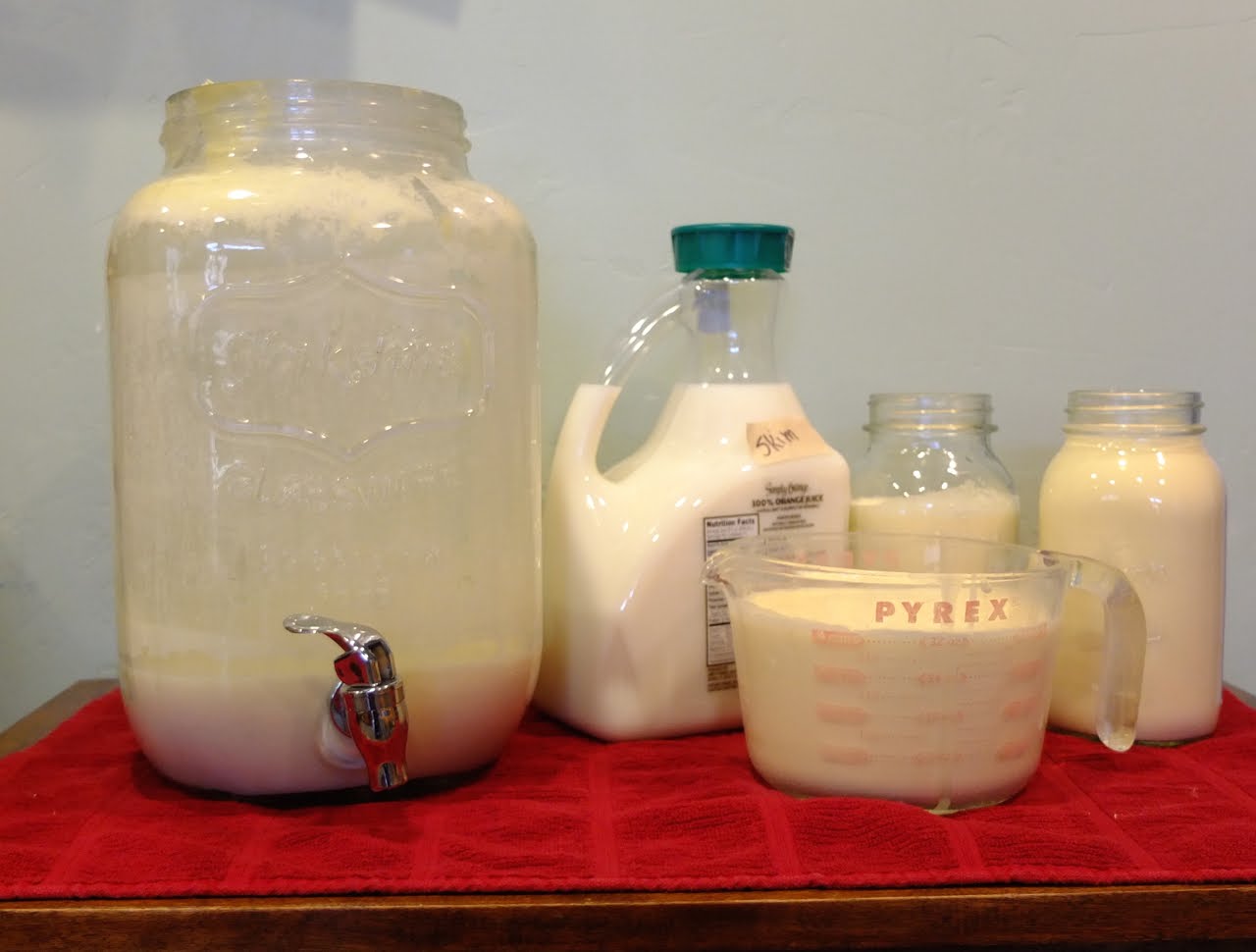 |
| After skimming the milk from the bottom, I use a ladle to get the cream off the top. I ended up with about 12 cups of cream, and 3 quarts of skim. The skim milk is more like store-bought 2% milk than store-bought skim milk. This method doesn't get as much cream out of the milk as a traditional separator does. |
 |
| I let the cream sit out until it comes to room temperature (about 70-72 degrees). This ages the cream a little bit, which helps it turn into butter faster. Cold cream turns into whipped cream. Warm cream seems to skip the whipped stage and go right to butter. I'm not sure if that's true for store-bought heavy cream, but that's the way it works with cream from our cow! |
 |
| I use the whisks in my stand mixer. You can see the grains starting to form in the cream. The mixer has been going for about 1 1/2 minutes, which isn't very long. |
 |
| Now it looks like big grains! This mixer does such a good job up until this point. The whips don't do a good job forming the butter into a mass. |
 |
| I have a Kilner Butter churn, which I love! But it takes longer than the stand mixer to turn cream into butter. I let the stand mixer do part, then I put it into the churn to finish it up. |
 |
| It takes less than a minute to get the butter into a nice clump, all ready to wash. It takes about 15 minutes to use the churn to make butter without the mixer. |
Yes, I need to wash the butter!
 |
| I drain off the buttermilk into a jar. I'll add it to my cultured buttermilk later. This buttermilk is not like buttermilk from the store. The buttermilk in the store is cultured, like yogurt. This is a little like the whey that comes from making cheese. |
 |
| I put the butter into a bowl that has ice and water in it. The butter is quite soft at room temperature so it's hard to wash. The ice water firms up the butter quickly. |
 |
| You can see there is still milk in the butter. I knead it with the spatula and the milk comes out easily. |
 |
| It takes about 3 rinses before the water is clear and the butter is washed. It's important to get as much buttermilk out as you can because the butter will last much longer when it's clean. |
 |
| 9.1 ounces of butter from 4 cups (1 quart) of cream. |
If you want to add salt, now is the time to do it. Salt is important if you want butter to last longer, and most people like the taste of salted butter. You'll need to add it to taste, there isn't really a recipe to tell you how much to add. I add about 1/2 teaspoon to 8 ounces of butter. If I'm using it for cooking, I don't add any salt.
It makes great cookies!
 |
| Yum! You don't need your own cow to make butter. You can use heavy whipping cream from the store. |
 |
| Here's Echo ready to come in for milking. She gives us about 4 gallons of milk every day! That's plenty of milk to drink and make cheese, and lots of cream to make butter and ice cream! |
If you're interested in cream separators and how they work, here's a good link to get you started.


